“Pressure” to go on screen at Tehran cultural center
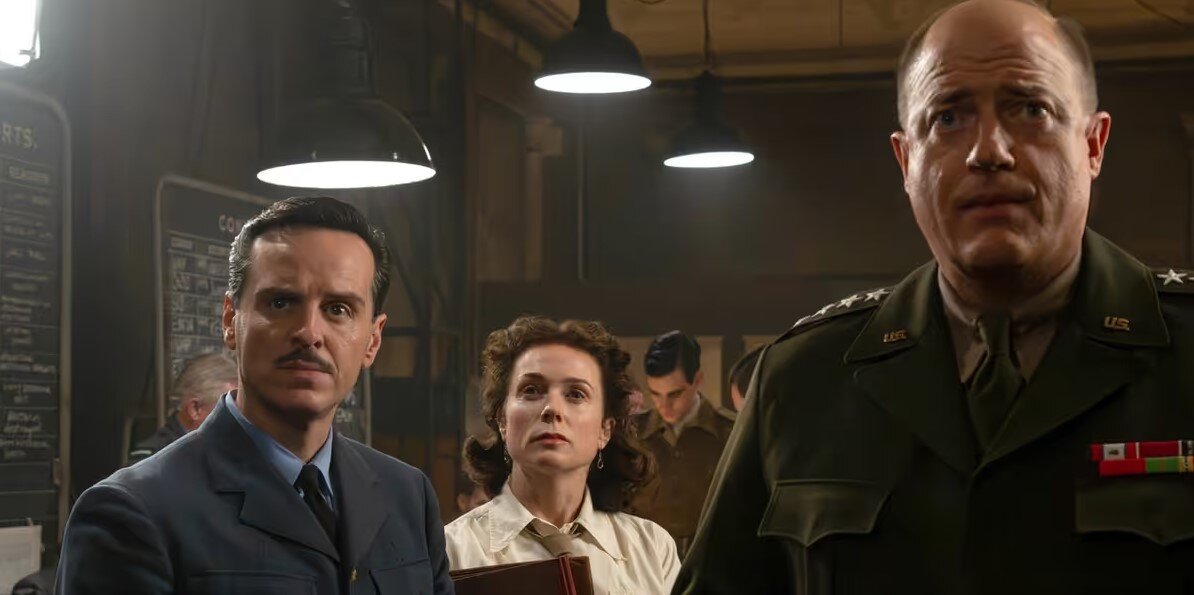
TEHRAN- Arasbaran Cultural Center in Tehran is scheduled to screen Australian filmmaker Anthony Maras’ 2026 war drama “Pressure” on Sunday evening.
Film critic Kourosh Jahed is set to attend a screening of the film followed by a review session.
"Pressure" explores the tense hours before the Allied invasion of Normandy during World War II, focusing on the crucial role played by meteorologist James Stagg in determining when the D-Day operation could safely begin.
Andrew Scott stars as Stagg, the Scottish meteorologist appointed chief meteorological officer at the Supreme Headquarters Allied Expeditionary Force (SHAEF), while Brendan Fraser portrays Gen. Dwight D. Eisenhower, the Allied commander responsible for making the final decision on the invasion. The cast also includes Kerry Condon, Chris Messina and Damian Lewis.
Set in 1944, the story follows the final preparations for Operation Overlord, the massive Allied campaign to liberate German-occupied Europe. The invasion is initially scheduled for June 5, but Eisenhower is increasingly concerned about the risks involved, particularly following the disastrous Exercise Tiger rehearsal several weeks earlier.
On June 2, Eisenhower summons Stagg to Southwick House, SHAEF’s headquarters, and asks him to provide a weather forecast for the operation. Stagg leads a British-American meteorological team that soon identifies two powerful low-pressure systems moving toward the English Channel. Their forecast predicts heavy rain, poor visibility, strong winds and high waves, conditions that could make the planned amphibious landings extremely dangerous.
Stagg’s assessment puts him at odds with American meteorologist Col. Irving P. Krick, who relies heavily on historical weather patterns and believes the conditions will remain favorable. As the two forecasts continue to conflict, Eisenhower finds himself under increasing pressure from his senior commanders, who warn that postponing the invasion could give German forces time to discover the Allied plans.
The disagreement reaches a critical point on June 4, when Stagg once again argues that the invasion should be postponed. He faces resistance from senior commanders, but remains convinced that proceeding under the predicted conditions could lead to catastrophe. His personal situation also becomes increasingly difficult when he learns that the hospital where his pregnant wife is staying has been bombed.
A breakthrough eventually comes when weather observations from Ireland indicate a temporary break in the storm system. Krick agrees with the new assessment, giving Stagg the confidence to recommend June 6 as the next possible date for the invasion.
In the early hours of June 5, Stagg presents his final forecast to Eisenhower, who decides to proceed. The following day, Allied forces launch the Normandy landings by sea and air. The invasion catches German forces off guard and marks the beginning of the liberation of Western Europe.
After hearing news of the operation’s success, Stagg leaves Southwick House to find his family. He discovers that his wife and newborn son have survived the bombing, bringing a deeply personal conclusion to his ordeal.
The film closes by recalling Eisenhower’s later assessment that the success of D-Day was partly due to the Allies having “better meteorologists than the Germans,” underlining the extraordinary importance of weather forecasting in one of the most consequential military operations in history.
SAB/
Leave a Comment